
Fatigue
types, tests, treatments

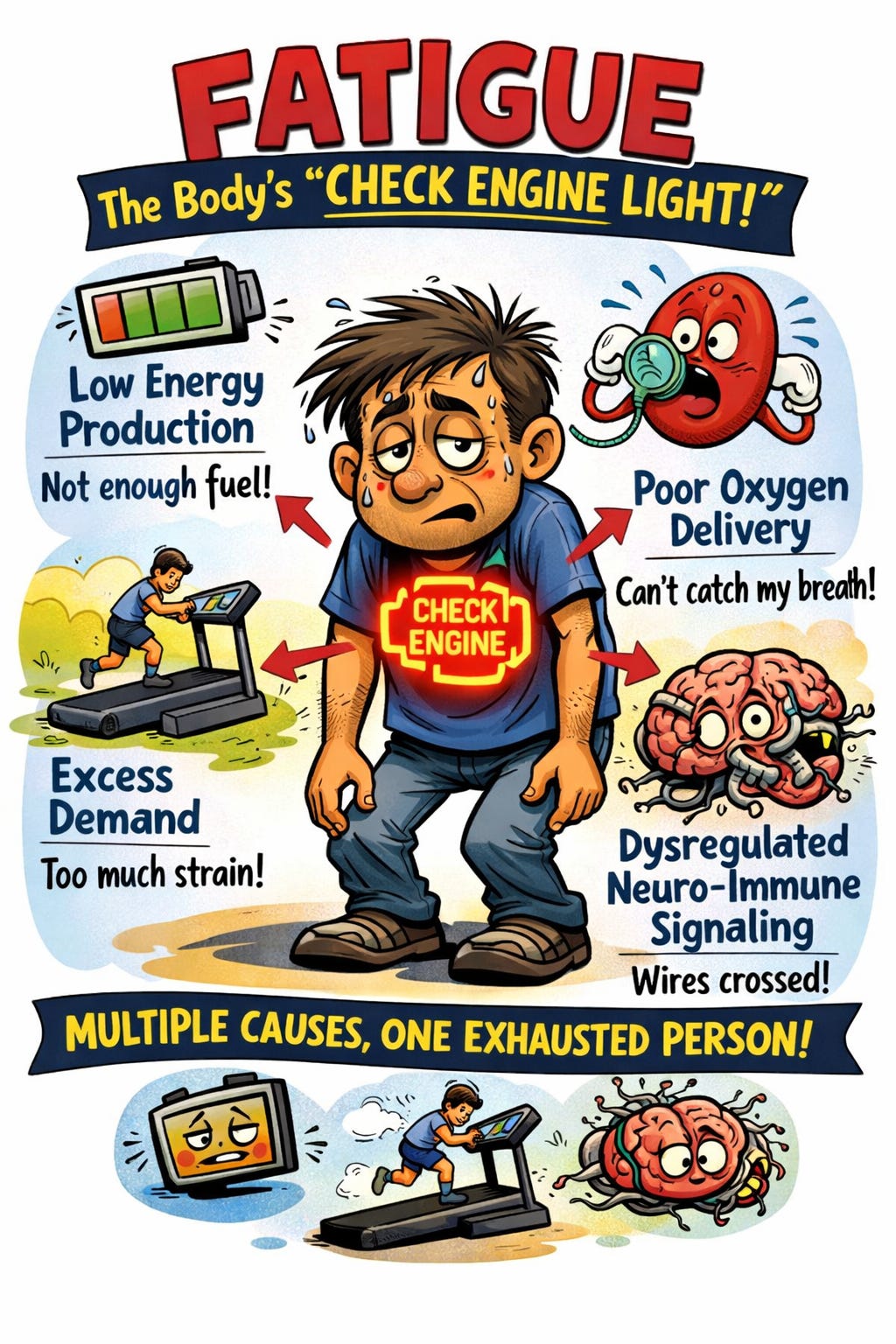
Fatigue is the body’s “check engine light.” It can mean low energy production, excess demand, poor oxygen delivery, or dysregulated neuro-immune/autonomic signaling—and the same person can have more than one mechanism at once.
What tends to invigorate us (physiology-first)
Think in terms of mitochondria + nervous system tone + fuel/oxygen + circadian timing:
Sleep quantity and quality (especially regular wake time, adequate deep/REM, no untreated sleep apnea).
Stable blood sugar / metabolic flexibility (less reactive hypoglycemia; fewer glucose spikes). FIX insulin resistance or “dismetabolic” syndrome.
Movement that matches capacity (zone 2, resistance training, frequent light activity; not overtraining).
Morning light + circadian alignment (daytime light, dim evenings).
Meaningful engagement / novelty / social connection (dopamine + autonomic balance).
Hydration + electrolytes (especially if orthostatic intolerance is in play).
Adequate protein, iron, B12/folate, magnesium (common limiting factors).
What commonly makes us tired
Sleep disruption (insomnia, apnea, restless legs, circadian misalignment, alcohol, sedatives).
Inflammation/infection (acute viral illness, post-viral states, autoimmune activity).
Endocrine/metabolic issues (thyroid disease, diabetes/prediabetes, adrenal insufficiency, sex hormone deficiency or hormones out of balance, perimenopause).
Hematologic/oxygen delivery (iron deficiency ± anemia, B12/folate deficiency, cardiopulmonary limitation).
Neuro/autonomic dysfunction (POTS/orthostatic intolerance, migraine variants, post-concussion).
Medication/substance effects (antihistamines, beta blockers, SSRIs/SNRIs in some, benzos, opioids, cannabis, alcohol).
Mood/cognitive load (depression, anxiety, burnout, grief; often coexists with medical drivers).
Key etiologies —for example-
EBV / mono (infectious mononucleosis)
EBV mono typically improves in 2–4 weeks, but fatigue can linger for weeks to months in some people.
Clinical pearl: if someone has “EBV fatigue” for many months, don’t anchor on EBV—broaden the differential and treat the physiology you find. CDC explicitly notes that if illness persists beyond months without confirmed EBV mono, consider other causes including chronic fatigue syndromes.
Testing nuance: EBV serologies are easy to misinterpret and “positive EBV” is common because most adults have prior exposure and latent infection.
ME/CFS (myalgic encephalomyelitis / chronic fatigue syndrome)
ME/CFS is not “just tired.” A defining feature is post-exertional malaise (PEM)—worsening symptoms after physical, cognitive, or emotional exertion—plus unrefreshing sleep and functional impairment, often with cognitive impairment and/or orthostatic intolerance.
There is no single confirmatory test, so diagnosis is clinical + exclusion of other fatiguing illnesses with a targeted work-up.
Management cornerstone: pacing/energy management tailored to avoid PEM; orthostatic support when present. NICE’s updated guidance moved away from prescribing graded exercise therapy as a cure (the evidence and interpretation are debated, but the “PEM-first” framing is clinically important).
Low B12 (and related hematinic issues)
B12 deficiency can present with fatigue, megaloblastic anemia, and neurologic changes (paresthesias, gait issues, cognitive symptoms), sometimes before anemia is dramatic.
High-yield causes include malabsorption (pernicious anemia, GI surgery), meds (metformin, acid suppression), low intake, and inflammatory bowel conditions.
“Adrenal fatigue” vs real adrenal disease
“Adrenal fatigue” is widely used in wellness circles, but “traditional “ allopathic docs say that AF is not an accepted medical diagnosis; major endocrine organizations note there’s no scientific proof supporting it as a distinct condition. But these are the same people that say something does not exist if they can not define it using their limited traditional resources, etc.
That said, the symptom cluster (tired, wired, salt cravings, poor stress tolerance) is real—just usually explained by sleep debt, chronic stress physiology, depression/anxiety, underfueling, overtraining, dysautonomia, thyroid/iron/B12 issues, etc.
What you do want to rule out: adrenal insufficiency (Addison’s- primary) or secondary). That’s uncommon but high-stakes and testable.
A practical diagnostic approach - Take to your Doc
1) Define the fatigue phenotype (2 minutes of precision)
Time course: acute (<2 weeks), subacute (2–12 weeks), chronic (>3 months), >6 months (think ME/CFS criteria, chronic disease).
Type: sleepiness ( like OSA, etc) vs low stamina vs weakness vs lack of motivation vs PEM.
Pattern: morning vs afternoon crash, post-meal crash, exertional crash, orthostatic symptoms.
Function: “What can you do now that you couldn’t 3 months ago?”
2) Screen for red flags (same-day or urgent workup)
Chest pain, syncope, progressive dyspnea, weight loss, fevers/night sweats, lymphadenopathy, GI bleeding, new focal neuro deficits, severe depression with suicidality, inflammatory arthritis signs, new severe headaches, suspected OSA with dangerous sleepiness.
3) High-yield history/exam targets
Sleep: OSA risk (snoring, witnessed apneas), insomnia phenotype, RLS.
Mood/stress: anhedonia, anxiety, trauma load, burnout.
Meds/substances: sedatives, antihistamines, alcohol, cannabis, opioids.
Diet/fueling: protein intake, iron sources, under-eating, disordered eating patterns.
Infection/inflammation: mono-like illness, long COVID history, autoimmune symptoms.
Ortho intolerance: tachycardia on standing, dizziness, heat intolerance, “coat-hanger” neck pain.
Exam: vitals including orthostatics, cardiopulmonary, thyroid, pallor, neuro, lymph nodes, joint/skin.
4) Initial labs: targeted, not a “lab dump”
AAFP reviews emphasize that indiscriminate testing is low-yield; let history/exam guide the work-up.
Common “first pass” set (adjust based on patient context):
CBC (anemia, infection)
CMP (renal/hepatic, electrolytes)
TSH ± free T4
Ferritin + iron/TIBC (especially menstruating women, athletes, vegetarians)
B12 ± MMA (and folate) when suspicion is moderate/high
HbA1c / fasting glucose (± fasting insulin if metabolic phenotype)
CRP/ESR if inflammatory features
Urinalysis; pregnancy test when appropriate
Consider vitamin D if risk factors, bone/muscle pain, low sun (not a universal “fatigue test,” but sometimes contributory)
5) Second-line testing (only when indicated)
Sleep study (strong OSA suspicion)
Morning cortisol ± ACTH stimulation (true adrenal insufficiency concern)
Celiac testing, HIV/hepatitis, tick-borne depending on risk
BNP/echo, PFTs, ECG when cardiopulmonary symptoms
Orthostatic testing / POTS eval if clear phenotype
ME/CFS criteria assessment when >6 months + PEM pattern and exclusions done
EBV testing only when it changes management or clarifies an acute mono-like syndrome; avoid “EBV fishing expeditions.”
Treatment principles (natural + conventional), guided by the driver
Foundation (almost always beneficial, even while diagnosing)
Sleep protocol: consistent wake time; morning light; limit late caffeine/alcohol; treat insomnia; screen/treat OSA.
Energy management: avoid boom/bust; schedule recovery; short movement “snacks.”
Protein-forward nutrition + micronutrient repletion: adequate protein, iron/B12/folate as needed.
Metabolic stabilization: fewer ultra-processed foods; post-meal walks; resistance training; consider CGM for pattern recognition (selected patients).
Stress physiology: breathwork, mindfulness, CBT-I, therapy, social reconnection.
Targeted examples
B12 deficiency: treat the cause (absorption vs intake) and replete; monitor symptom response and labs. NIH notes fatigue and neuro findings can be part of deficiency.
Iron deficiency (even without anemia): replete iron and address source of loss; this is a frequent “hidden” fatigue driver.
Hypothyroidism: replace appropriately; also avoid blaming “thyroid” when labs are normal—look elsewhere.
Depression/anxiety: psychotherapy, sleep, exercise dosing, meds when indicated—often improves fatigue dramatically.
Post-viral fatigue / mono: graded return based on symptoms, but don’t force exercise into PEM; hydrate, sleep, nutrition; rule out anemia/thyroid/OSA if lingering.
ME/CFS: pacing/“energy envelope,” symptom-directed care (sleep, pain, OI), consider compression + fluids/salt for orthostasis; treat comorbid migraines, IBS, MCAS-like patterns when present. CDC emphasizes PEM and unrefreshing sleep as core.
Bottom-line takeaways from some of the most widely read ( and quoted) books in print
From Fatigued to Fantastic (Jacob Teitelbaum) — “SHINE”
Teitelbaum’s core framework is the S.H.I.N.E. model: Sleep, Hormones, Immunity/Infection, Nutrition, Exercise—a pragmatic checklist for “common correctables” in fatigue/fibromyalgia presentations.
Clinical value: as a systems-based reminder to treat sleep, endocrine issues, nutritional deficits, immune triggers, and deconditioning—while individualizing the plan.
Boundless Energy (Deepak Chopra) — mind/body + Ayurveda lens
Chopra’s thesis is that fatigue relates to mind-body imbalance and can be addressed with an Ayurvedic constitution-based program plus lifestyle practices to restore vitality.
Clinical value: useful for behavior change, stress reduction, and patient engagement; less useful as a biomedical differential unless paired with standard evaluation.
Good Energy (Casey & Calley Means) — metabolism/mitochondria framing
The book argues that many symptoms and chronic diseases stem from metabolic dysfunction and disrupted cellular energy production; focus is on nutrition quality, movement, sleep, stress, and environmental inputs.
Clinical value: strong motivational frame for “metabolic fatigue” phenotypes (post-meal crashes, insulin resistance, poor sleep, low fitness), and aligns well with cardiometabolic risk reduction.
Energy Medicine for Women (Donna Eden) — “energy systems” practices
Eden’s work centers on techniques aimed at balancing the body’s “energy systems” (meridians/chakras/aura concepts) and daily routines intended to improve vitality.
Clinical value: some patients experience subjective benefit via relaxation, body awareness, breath/movement rituals—best positioned as an adjunct that doesn’t replace medical evaluation for anemia, thyroid disease, adrenal insufficiency, sleep disorders, etc.
Other “landmark” clinical resources worth anchoring to
AAFP Fatigue in Adults (2023) for a primary-care, high-yield diagnostic strategy and caution against indiscriminate lab panels.
CDC ME/CFS clinical overview + diagnostic approach for PEM-centered evaluation and symptom clusters.
National Academies/IOM clinician guide (2015) for ME/CFS framing and tools.
Endocrine Society / Mayo Clinic on “adrenal fatigue” not being an established diagnosis—redirect toward ruling out real adrenal disease and addressing stress physiology.
Practical “bottom line” summary
Name the fatigue phenotype (sleepiness vs low stamina vs PEM vs orthostatic vs mood-driven).
Rule out common, reversible constraints (sleep apnea/insomnia, iron/B12, thyroid, diabetes, meds/substances, depression/anxiety).
If PEM is prominent, shift early to ME/CFS-style pacing and autonomic support while you complete exclusions.
Use books/frameworks as behavioral scaffolding, but let objective findings and phenotype guide treatment.
This is a very common problem and it is truly a heartbreaker in that traditional medicine feels like if all blood tests are normal then there’s no disease. Sometimes everything is normal and this is more a diagnosis of exclusion. This is an area for medical research and for medical treatment to get people feeling better.
Dr. P