
PARASITES
We ARE exposed almost daily, and many of us get infected!

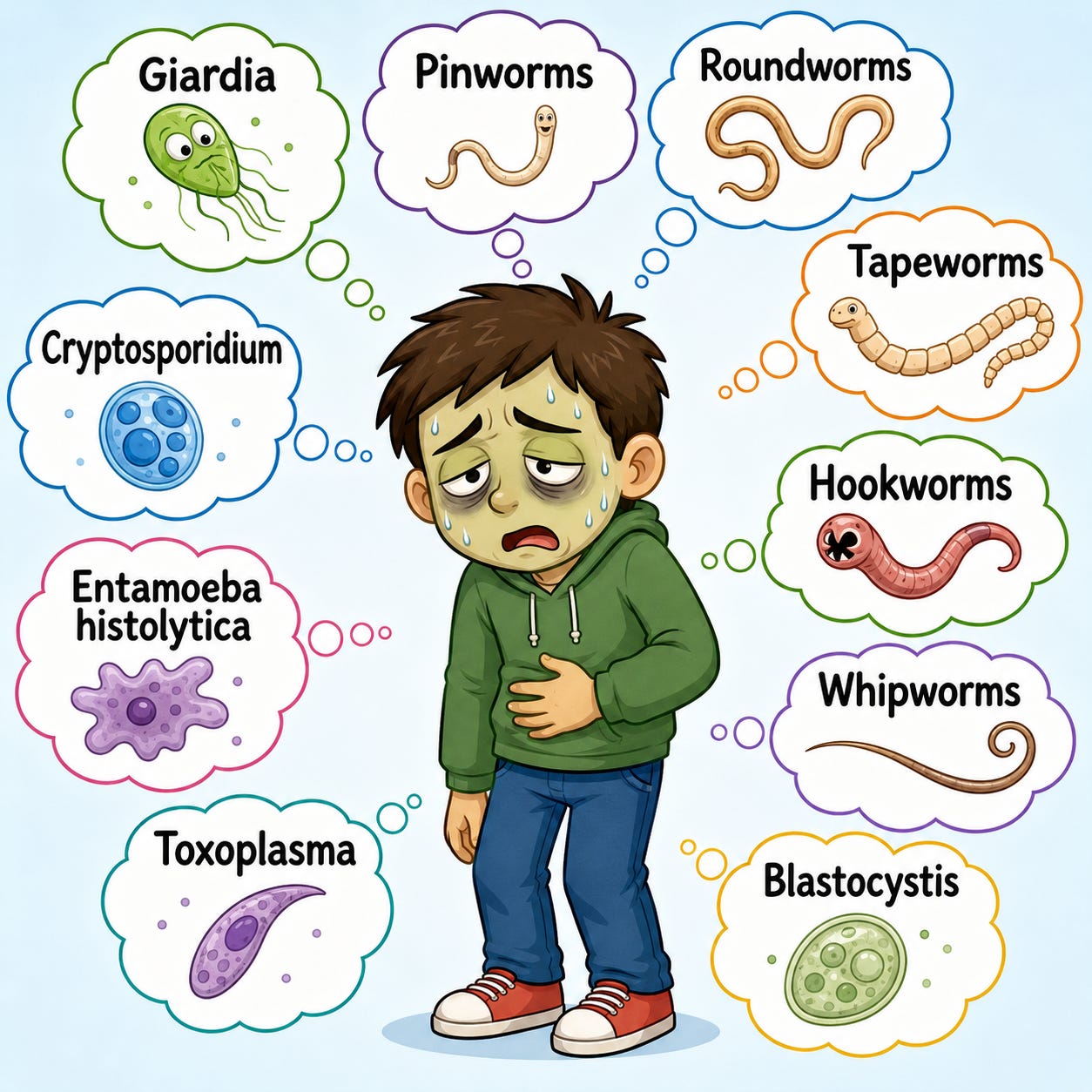
The statement “all humans have parasite infections” is too broad. A better way to say it is: all humans are exposed to parasites at times, but not everyone has an active clinically meaningful parasite infection. Exposure is common; persistent infection depends on the organism, dose, immune status, hygiene, geography, travel, diet, pets, and sanitation.
Most common places people get exposed to parasites
1. Contaminated water
This is one of the biggest routes worldwide and still relevant in the U.S.
Common settings include:
Lakes, rivers, ponds, streams
Poorly maintained pools, splash pads, water parks, hot tubs
Well water or untreated water
Camping/hiking water sources
Floodwater or water contaminated by sewage or animal feces
Common parasites: Giardia, Cryptosporidium, and, rarely, amoebas such as Naegleria fowleri in warm freshwater. CDC notes that Crypto spreads by swallowing contaminated recreational water, contaminated drinks or ice, contaminated food, or by touching the mouth with contaminated hands.
Crypto and Giardia are classic “fecal-oral” waterborne parasites. Even chlorinated pools can be a problem with Crypto because it is relatively chlorine-resistant.
2. Food exposures
Foodborne parasite exposure can occur through:
Undercooked pork, wild game, bear, boar, or other meats
Raw or undercooked fish, sushi, ceviche, or freshwater fish
Unwashed fruits and vegetables
Food handled by someone with poor hand hygiene
Produce irrigated or washed with contaminated water
Raw milk or contaminated dairy in some settings
Undercooked lamb, rabbit, venison, or game meats
Examples include Toxoplasma gondii, Trichinella, Taenia tapeworms, Anisakis from fish, and Cyclospora from contaminated produce. Food and water are major ways parasites enter the body, particularly when food is contaminated with fecal material from humans or animals.
3. Pets and domestic animals
Pets are a real exposure source, especially when feces contaminates hands, soil, litter boxes, bedding, floors, or play areas.
Common pet-related exposures:
Puppies and kittens with roundworms or hookworms
Dogs/cats that hunt or eat raw prey
Litter boxes
Dog parks
Yards contaminated with feces
Children playing in soil or sand where animals defecate
Poor handwashing after handling pets or pet waste
Important examples:
Toxocara from dog/cat roundworm eggs in feces-contaminated soil
Hookworm larvae from contaminated soil or sand
Giardia and Crypto from infected animals
Toxoplasmosis from cat feces/litter or contaminated soil
CDC specifically states that toxocariasis spreads through contact with infected dog or cat feces, with eggs entering people’s mouths through contaminated dirt or unwashed hands.
4. Soil, sand, and yard exposure
Soil exposure is often underappreciated.
Risk settings include:
Gardening without gloves
Children playing in dirt or sandboxes
Walking barefoot in contaminated soil or beaches
Dog parks
Areas with stray cats/dogs
Farm soil or animal pens
Tropical/subtropical regions with poor sanitation
Parasites may spread when eggs or larvae from feces contaminate soil. Examples include Toxocara, hookworms, Strongyloides, and other soil-transmitted helminths. Soil-transmitted helminths spread through soil or water contaminated by feces.
In the southeastern U.S., including warmer humid areas, Strongyloides is uncommon but still clinically relevant, especially in older adults, people with remote rural exposure, immunosuppression, or steroid use.
5. Insects and bites
Some parasites are transmitted by vectors.
Examples:
Malaria — mosquitoes, mostly travel-related for U.S. patients
Babesia — ticks, especially Northeast/Upper Midwest U.S.
Leishmania — sand flies, mainly travel-related
Chagas disease — triatomine “kissing bugs,” more common in Latin America but possible in southern U.S. exposure contexts
This category is heavily geography-dependent.
6. Travel exposures
Travel increases exposure risk, especially to areas with:
Poor sanitation
Untreated water
Street food
Inadequate sewage systems
Tropical climates
High mosquito burden
Freshwater swimming in endemic areas
Common travel-related parasites include Giardia, Entamoeba histolytica, Cyclospora, malaria, schistosomiasis, hookworm, Strongyloides, and various tapeworms. CDC lists contaminated food and water as common sources of parasitic infection for travelers.
7. Recreational water and outdoor activities
Specific activities that increase risk:
Swimming in lakes, rivers, ponds, and creeks
Swallowing pool or splash-pad water
Kayaking, tubing, whitewater rafting
Hiking/camping with untreated water
Mud runs or obstacle races
Swimming after heavy rain or near runoff
Hot tubs with poor maintenance
Common concerns: Giardia, Crypto, swimmer’s itch, and rarely amoebic infections. CDC identifies recreational water as a common source of diarrheal illness from organisms including Cryptosporidium and Giardia.
8. Farms, livestock, and wildlife
Exposure can come from:
Cattle, sheep, goats, pigs, chickens
Petting zoos
Animal manure
Barns and stalls
Wildlife feces
Hunting and field dressing game
Eating wild game undercooked
Parasites of concern include Crypto, Giardia, Toxoplasma, Trichinella, tapeworms, and others depending on the animal.
9. Person-to-person fecal-oral spread
Some parasites spread through contaminated hands and surfaces.
Risk settings:
Daycares
Nursing homes
Households with diarrhea illness
Changing diapers
Poor hand hygiene
Shared bathrooms
Sexual practices involving fecal-oral exposure
Crypto, Giardia, and pinworm are common examples. CDC notes Crypto can spread by touching the mouth with contaminated hands after changing diapers, caring for an infected person, or touching contaminated objects.
10. Children’s environments
Children are exposed more often because they put hands in mouths and play in dirt.
Common sources:
Sandboxes
Playgrounds
Daycares
Pets
Litter boxes
Pools/splash pads
Soil contaminated with animal feces
Pinworm is especially common in children and spreads through microscopic eggs on hands, bedding, clothing, surfaces, and under fingernails.
Practical “most common” list for U.S. patients
For typical U.S. primary care, the most realistic parasite exposure categories are:
Recreational water — Giardia/Crypto
Pets/soil/fecal contamination — Toxocara, hookworm, Giardia
Undercooked meats or raw fish — Toxoplasma, Trichinella, tapeworms, Anisakis
Daycare/household spread — Giardia, Crypto, pinworm
Travel — broadens the differential significantly
Ticks — Babesia in endemic regions
Immunosuppression/steroid exposure — raises concern for Strongyloides reactivation in the right patient
Prevention pearls
The biggest preventive steps are simple:
Wash hands after bathroom use, diaper changes, gardening, animal care, and before eating.
Deworm pets appropriately through a veterinarian.
Dispose of pet feces promptly.
Keep sandboxes covered.
Wear shoes outdoors, especially in warm sandy/soil environments.
Wash produce well.
Cook pork, wild game, and fish appropriately.
Avoid swallowing pool, lake, river, or splash-pad water.
Use filtered/boiled water when camping or traveling.
Be cautious with raw fish, wild game, and untreated water.
Pregnant or immunocompromised patients should avoid cleaning cat litter when possible and should be especially careful with undercooked meat and soil exposure.
Bottom line: parasite exposure is common, but active infection is not universal. The most common exposure routes are contaminated water, food, soil, animal feces/pets, insects, travel, and fecal-oral person-to-person spread.
What are the best treatment(s)
The best treatment is organism-specific. There is no one “parasite treatment” that safely and reliably covers everything. In primary care, the best approach is usually:
1. Identify the likely parasite/exposure pattern.
2. Test appropriately when possible.
3. Treat with the correct antiparasitic.
4. Prevent reinfection in the household, pets, food, water, and environment.
Many would avoid broad “parasite cleanse” protocols as the main treatment. Claiming that many are under-studied, can irritate the GI tract or liver, and may delay correct diagnosis.
Best first step: match symptoms + exposure
If diarrhea, bloating, gas, foul stools, weight loss
Think Giardia, Cryptosporidium, Cyclospora, Entamoeba histolytica, or other intestinal protozoa.
Testing options:
Stool PCR/GI pathogen panel, if available
Giardia/Crypto antigen testing
Ova and parasite exam, ideally 3 separate stool samples on different days when suspicion is high; CDC specifically notes that three or more stool samples may be needed because shedding can be intermittent.
Common treatments:
ParasiteCommon treatmentGiardiaTinidazole, metronidazole, or nitazoxanideCryptosporidiumHydration; nitazoxanide in immunocompetent patients; optimize immune statusCyclosporaTMP-SMXEntamoeba histolyticaMetronidazole or tinidazole plus a luminal agent such as paromomycin/iodoquinol
CDC notes Giardia may sometimes resolve without medication, but prescription therapy is commonly used when symptoms persist or are significant.
If anal itching, especially at night
Think pinworm, especially in children or households with children.
Best treatment:
Albendazole, mebendazole, or pyrantel pamoate
Repeat dose in 2 weeks
Treat household contacts when appropriate
Wash bedding, towels, underwear; trim nails; morning showering
CDC states pinworm treatment uses two doses, with the second dose two weeks later, because the medicines kill worms but not eggs.
If eosinophilia, rash, cough/wheezing, abdominal symptoms, travel, rural soil exposure, or steroid risk
Think helminths, especially Strongyloides, hookworm, roundworm, schistosomiasis, or other tissue-migrating parasites.
Important point: eosinophilia can appear before stool tests are positive, because larvae may be migrating before adult worms produce eggs. CDC Yellow Book notes stool ova/parasite testing can be negative early despite eosinophilia.
Common treatments:
ParasiteCommon treatmentStrongyloidesIvermectinHookworm / Ascaris / many intestinal wormsAlbendazole or mebendazoleSchistosomiasisPraziquantelTapewormsPraziquantel or niclosamide, depending on speciesTrichinellaAlbendazole or mebendazole; steroids if severe inflammatory disease
For Strongyloides, ivermectin is the CDC-listed first-line therapy, commonly 200 mcg/kg orally for 1–2 days. This matters clinically because undiagnosed Strongyloides can become dangerous with steroids or immunosuppression.
If exposure from cats, undercooked meat, pregnancy, eye disease, or immunosuppression
Think Toxoplasma gondii.
Treatment depends heavily on the scenario:
Healthy nonpregnant person with mild disease: often no treatment
Eye disease, pregnancy, congenital infection, or immunocompromised patient: specialist-guided therapy, often pyrimethamine-based regimens or TMP-SMX alternatives depending on context
This is not a “cleanse” situation; it needs proper diagnosis and risk stratification.
If tick exposure with fever, sweats, fatigue, hemolytic anemia
Think Babesia, especially Northeast/Upper Midwest or travel to endemic regions.
Treatment:
Atovaquone + azithromycin for most cases
Clindamycin + quinine for severe cases
Evaluate CBC, smear, PCR, hemolysis markers
Practical primary-care treatment framework
Step 1: Do not treat blindly unless the situation is obvious
Obvious examples include classic pinworm in a household or high-risk empiric Strongyloides treatment before immunosuppression in someone with credible exposure history.
For most other cases, test first.
Step 2: Order targeted labs
Reasonable starting evaluation:
CBC with differential — looking for eosinophilia
CMP — liver/kidney baseline before antiparasitics
Stool PCR/GI panel if diarrhea
Giardia/Crypto antigen or PCR
Ova and parasite exam x 3 if persistent symptoms, travel, eosinophilia, or high suspicion
Strongyloides IgG if compatible exposure or unexplained eosinophilia
Toxocara IgG if pet/soil exposure plus eosinophilia, pulmonary, liver, or eye findings
Schistosoma serology if freshwater exposure in endemic regions
Babesia smear/PCR/serology if tick-compatible illness
Step 3: Treat based on organism
A concise “cheat sheet”:
SyndromeLikely organismsBest treatmentsWatery diarrhea after lake/camping/daycareGiardia, CryptoTinidazole/metronidazole/nitazoxanide depending organismPersistent diarrhea after travel or produceGiardia, Cyclospora, EntamoebaTinidazole/metronidazole, TMP-SMX, or amoeba regimen depending resultNight anal itchingPinwormAlbendazole/mebendazole/pyrantel, repeat in 2 weeksEosinophilia + soil/travel exposureStrongyloides, hookworm, AscarisIvermectin or albendazole depending suspected parasiteUndercooked pork/wild game + myalgias/eosinophiliaTrichinellaAlbendazole/mebendazole; steroids if severeRaw fish + acute epigastric painAnisakisEndoscopic removal; meds often less usefulTick fever/hemolysisBabesiaAtovaquone + azithromycinCat litter/undercooked meat + pregnancy/eye/CNS riskToxoplasmaSpecialist-guided therapy
Natural/supportive measures that actually help
These are supportive, not substitutes for proven therapy when a real infection is present.
Hydration and electrolytes for diarrheal illness
Temporary lactose reduction after Giardia, because transient lactose intolerance can occur
Probiotics may help recovery after infectious diarrhea, though they do not reliably eradicate parasites
Fiber/prebiotics once acute diarrhea improves
Adequate protein, zinc, vitamin A, vitamin D, and general immune support
Food safety: cook meat/fish properly, wash produce, avoid untreated water
Environmental control: pet deworming, handwashing, shoes outdoors, covered sandboxes
Herbal agents sometimes discussed include wormwood, black walnut, clove, berberine-containing herbs, garlic, oregano oil, and neem. The problem is that dosing, purity, toxicity, interactions, pregnancy safety, and true eradication rates are not as reliable as standard antiparasitic therapy. I would not use these as primary therapy for suspected Strongyloides, amoebiasis, toxoplasmosis, neurocysticercosis, schistosomiasis, babesiosis, or significant symptomatic infection.
My clinical bottom line
For most U.S. patients, the most useful treatment approach is:
Diarrhea/bloating after water exposure: test for Giardia/Crypto; treat Giardia with tinidazole/metronidazole/nitazoxanide when confirmed or strongly suspected.
Nighttime anal itching: treat pinworm with albendazole/mebendazole/pyrantel and repeat in 2 weeks; address household hygiene.
Eosinophilia or steroid/immunosuppression risk: check Strongyloides IgG and treat with ivermectin if positive or high-risk.
Travel, raw foods, pets, soil, or persistent symptoms: targeted testing beats a generic parasite cleanse.
Severe symptoms, blood in stool, fever, weight loss, pregnancy, immunocompromise, neurologic/eye symptoms, or marked eosinophilia: do not manage casually; test promptly and consider ID/tropical medicine input.
Any further questions?
Dr. P